Skip to content

Eyeglasses and Prescription Lenses in Cypress

The right eyeglasses should provide comfortable vision, fit securely, and reflect your personal style. Strong Vision offers a broad selection of frames and prescription lenses for adults and children, with options suited to everyday wear, work, sports, driving, and outdoor activities.

Our optical team will help you compare frames, lens materials, and treatments based on your prescription, lifestyle, and budget.

A woman tries on glasses in a store with a saleswoman beside her, looking at her reflection in a mirror.
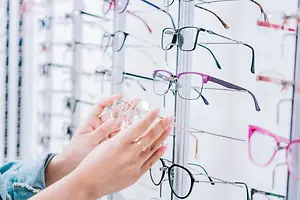
A woman holding a pair of glasses in her hands in front of a wall with multiple pairs of glasses hanging on it

Eyeglass Frames for Every Style

Our optical boutique carries European and American eyewear collections in classic, modern, athletic, and fashion-forward designs. Available brands include Ray-Ban, Oakley, Gucci, and others, with choices at a range of price points.

Frames are available in materials such as:

  • Acetate and other plastics
  • Stainless steel
  • Titanium Lightweight and flexible materials
  • Combination metal and plastic designs

Choosing a frame involves more than finding a color or shape you like. Our opticians consider how the frame sits on your nose, aligns with your eyes, fits at your temples, and accommodates your prescription lenses.

Prescription Lens Options

Modern prescription lenses can be customized for the distances and activities that matter most to you. Following a comprehensive eye examination, our optical team can explain which lens design and material may best meet your needs.

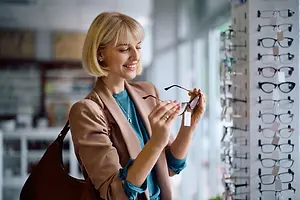
A woman in a store looking at glasses.
A young girl wearing glasses is being examined by an adult woman and another person in a room

Eyeglasses for Children

Children’s glasses need to fit their current facial measurements rather than leaving extra room for them to grow. Frames that are too large, loose, or poorly aligned can slide out of position and prevent the child from looking through the intended portion of the lenses.

When helping a child select glasses, our opticians consider:

  • Frame width and lens size
  • Fit at the bridge of the nose
  • Alignment with the child’s pupils
  • Comfort at the temples and behind the ears
  • Lightweight, durable frame materials
  • Flexible or spring hinges when appropriate
  • Impact-resistant lens options
  • The child’s activities and personal preferences

Including children in the selection process can help them feel more comfortable and confident wearing their new glasses. Our team can narrow the choices to suitable frames and then let your child help choose the style they like best.

Sports Glasses for Children

Everyday eyeglasses are not designed to protect the eyes during all sports. Children who participate in activities involving balls, racquets, sticks, close contact, or fast movement may benefit from sport-specific protective eyewear.

Depending on the activity, sports glasses may include impact-resistant lenses, durable frames, flexible temples, padding, or an adjustable strap. Our team can recommend options based on the sport and prescription.

Sports and Specialty Eyewear Fittings

Different sports, occupations, and hobbies create different visual and safety demands. A specialty eyewear fitting considers the environment, viewing distances, lighting, movement, protective requirements, and visual skills involved in the activity.

Personalized sports or performance eyewear may incorporate:

  • Prescription or nonprescription lenses
  • Impact-resistant materials 
  • Sport-specific frame designs
  • Polarized or tinted lenses
  • Anti-reflective treatment
  • Enhanced contrast for selected environments
  • Secure temples or straps
  • Wraparound coverage when appropriate

A golfer, cyclist, construction worker, skier, and computer user will not necessarily benefit from the same frame or lens design. Tell our team how and where you plan to use your eyewear so we can recommend an appropriate solution.

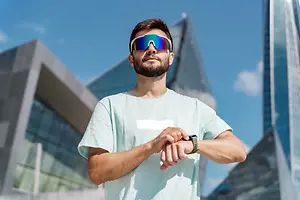
A man in sunglasses and a t-shirt is standing outside and looking at his smartwatch.
A woman in sunglasses and a blazer stands on the sidewalk

Sunglasses and UV Protection

Quality sunglasses can reduce glare, improve comfort outdoors, and help protect the eyes from ultraviolet radiation. We offer prescription and nonprescription sunglasses for adults and children, including options for driving, sports, and everyday use.

When choosing sunglasses, consider:

  • UVA and UVB protection
  • Prescription requirements
  • Lens color and tint
  • Polarization
  • Frame coverage and fit 
  • The activities and lighting conditions in which they will be worn

A darker lens does not necessarily provide better UV protection. Polarization can reduce glare reflected from roads, water, snow, and other horizontal surfaces, but UV protection should be evaluated separately.

Transitions® and Other Photochromic Lenses

Photochromic lenses automatically darken in response to ultraviolet light outdoors and return toward a lighter state indoors. They provide a convenient option for patients who move frequently between indoor and outdoor settings.

Different products vary in how dark they become, how quickly they change, their available colors, and how much they activate behind a vehicle windshield. Some patients may still prefer a separate pair of polarized sunglasses for driving or prolonged time in bright conditions.

Current Transitions® options include everyday photochromic lenses as well as products designed for greater light sensitivity, polarization, or driving. Availability depends on your prescription, chosen lens material, and the products carried by the practice.

Adaptive sun lenses are also available for selected outdoor activities. These lenses begin with a sunglass tint and adjust within a darker range as outdoor light changes, providing an alternative to sunglasses with one fixed tint.

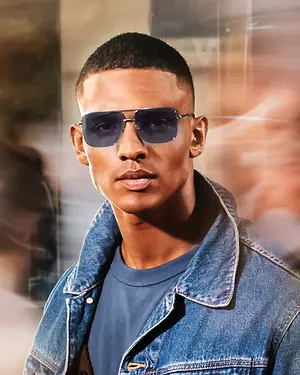
A man wearing sunglasses and a denim jacket is standing in front of a glass window. The man's face is slightly blurred.
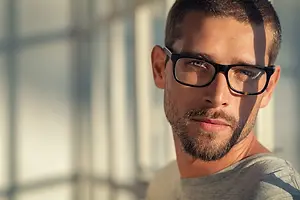
A man with a beard and glasses standing in front of a window

Anti-Reflective Lens Treatments

An anti-reflective treatment reduces reflections from the front and back surfaces of eyeglass lenses. This can make the lenses less distracting cosmetically and may improve visual comfort in situations involving artificial lighting, computer use, or nighttime glare.

Anti-reflective treatment may be especially helpful for:

  • Driving after dark
  • Working under bright indoor lighting
  • Using digital devices
  • High-index lenses, which may produce more reflections
  • Sunglasses, when applied appropriately to reduce reflections from behind the wearer

Anti-reflective treatment does not eliminate every source of glare or guarantee better night-driving performance. Our optical team can explain available treatments and recommend one based on your lenses and daily activities.

Follow the cleaning instructions provided with your eyewear. Using recommended cleaners and a clean microfiber cloth can help protect the treatment and extend the usable life of your lenses.

Caring for Your Eyeglasses

To keep your eyewear in good condition:

  • Rinse away dust or debris before wiping the lenses
  • Use an approved lens cleaner and microfiber cloth
  • Avoid paper towels, tissues, and household glass cleaners
  • Store glasses in a protective case
  • Use both hands when removing your frames
  • Avoid leaving eyewear in a hot vehicle
  • Visit our optical team for adjustments when frames become loose or uneven
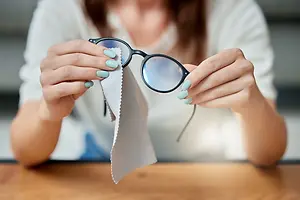
woman cleaning her glasses with a piece of cloth

Find Your Next Pair at Strong Vision

Whether you need everyday prescription glasses, children’s eyewear, sunglasses, or a specialty pair for work or sports, our optical team can help you compare practical options. Visit Strong Vision for personalized assistance selecting frames and lenses that fit your vision, activities, and style.

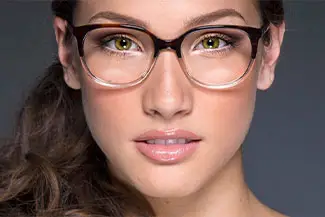
Close up of a woman wearing glasses.
We carry a large variety of top designer frames for both eyeglasses and sunglasses.
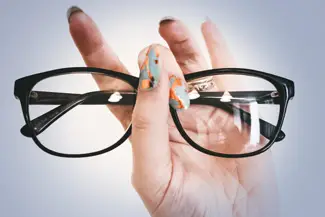
A hand holds a pair of black glasses with clear lenses, fingers showing colorful nail polish.
Eyeglasses are more popular today than ever, despite the availability of contact lenses and vision correction surgery.
A pair of colorful eyeglasses with a black frame rests on top of an open book with visible text and a white page, set against a blurred background.
Today’s eyeglass lens treatments make a real difference in what you see, and what you don’t see. Scratches, glare, ultraviolet rays—all are potential hazards to healthy sight that can be minimized or eliminated by a lens treatment.