Skip to content

Management of Eye Diseases in Cypress

Many eye diseases develop gradually and may not cause noticeable symptoms during their earliest stages. Comprehensive eye exams allow our optometrists to evaluate the health of your eyes, identify concerning changes, and recommend appropriate monitoring, treatment, or referral.

Strong Vision provides ongoing care for patients with glaucoma, cataracts, macular degeneration, diabetic eye disease, dry eye ocular conditions. When surgery or treatment from an ophthalmologist is necessary, we coordinate care to help patients understand and navigate the next steps.

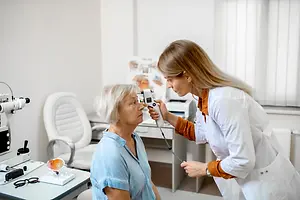
An older woman is sitting on a chair and having her vision checked by a doctor in a white coat. The doctor is holding a white eye chart and a red dot in the center. The woman is wearing a necklace and earrings. The doctor is standing in front of a white wall with an eye chart and a machine with a red dot on it.
A woman is getting her eyes checked by an optometrist in an optical clinic

How Are Eye Diseases Detected and Managed?

Eye disease management begins with a thorough evaluation of your vision, symptoms, medical history, medications, and risk factors. Depending on your needs, your examination may include eye pressure measurement, retinal imaging, visual field testing, or other diagnostic procedures.

Some conditions can be monitored or managed within our practice, while others require care from an ophthalmologist or another medical provider. We work with your healthcare team when coordinated care is appropriate.

Cataracts and Cataract Surgery Co-Management

A cataract develops when the natural lens inside the eye becomes cloudy. Cataracts usually progress gradually and may cause blurry or hazy vision, glare, halos around lights, faded colors, reduced night vision, or frequent changes to an eyeglass prescription.

Early cataracts may be managed with updated glasses, improved lighting, and glare-reducing strategies. When a cataract begins to interfere with activities such as reading, driving, or watching television, surgery may be considered.

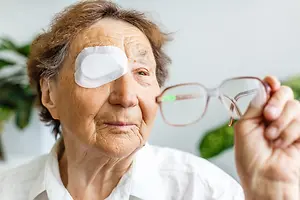
Close up of an elderly woman wearing an eye patch and glasses.
An elderly man wearing glasses and a blue checkered shirt is sitting on a couch and working on his laptop.

Age-Related Macular Degeneration

Age-related macular degeneration, or AMD, affects the macula, the central portion of the retina responsible for detailed straight-ahead vision. AMD can make reading, recognizing faces, driving, and other detail-oriented activities more difficult, although peripheral vision is generally preserved.

There are two primary forms of AMD:

  • Dry AMD is the more common form and usually progresses gradually as cells in the macula become damaged.
  • Wet AMD occurs when abnormal blood vessels grow beneath the retina and leak fluid or blood. It can cause faster and more severe central vision changes.

Diabetic Retinopathy

Diabetic retinopathy occurs when diabetes damages blood vessels in the retina, the light-sensitive tissue at the back of the eye. It can affect people with type 1, type 2, or gestational diabetes.

The condition may not cause symptoms in its early stages. As it progresses, patients may notice:

  • Blurred or fluctuating vision
  • Dark spots or floaters
  • Empty areas in the visual field
  • Difficulty seeing at night
  • Changes in color perception
  • Partial or sudden vision loss

Because early diabetic retinopathy can go unnoticed, regular dilated eye examinations are an important part of diabetes care. Your recommended examination schedule will depend on your type of diabetes, pregnancy status, retinal findings, and other health factors.

a woman doctor examining a senior man's eyes with an ophthalmoscope
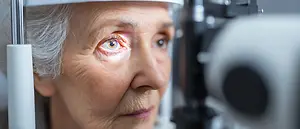
Elderly woman with gray hair is looking at an eye exam device

Glaucoma Testing and Management

Glaucoma is a group of eye diseases that damage the optic nerve. Some forms develop without early symptoms, making routine examinations and appropriate testing especially important for patients with elevated risk.

Our optometrists can evaluate eye pressure, optic nerve appearance, visual fields, and other findings associated with glaucoma. Depending on the diagnosis and severity, care may involve continued monitoring, prescription eye drops, or referral for laser or surgical treatment.

Dry Eye and Ocular Surface Disease

Dry eye develops when the eyes do not produce enough tears or when tears evaporate too quickly. Symptoms can include burning, grittiness, redness, excessive watering, fluctuating vision, and contact lens discomfort.

Our optometrists evaluate the tear film, eyelids, and ocular surface to identify factors contributing to dry eye. Treatment may include lubricating or prescription drops, punctal plugs, meibomian gland treatment, low-level light therapy, or changes to daily eye care habits.

A man sitting at a desk with his hand on his face, wearing a blue shirt, a ring, and eyeglasses, looking at his laptop with a potted plant on the window sill behind him.
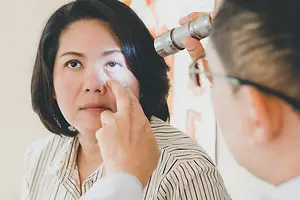
A woman with short hair and a striped shirt has her eye examined by a doctor with an ophthalmoscope.

When Do Vision Changes Require Prompt Attention?

Contact our office promptly if you experience new distortion, a sudden increase in floaters, flashes of light, a curtain or shadow in your vision, sudden vision loss, significant eye pain, or marked redness. These symptoms may indicate a condition requiring urgent evaluation.

Schedule an Eye Disease Evaluation in Cypress

Whether you have been diagnosed with an eye disease, have risk factors that require monitoring, or have noticed changes in your vision, Strong Vision can help you take the next step. Schedule an appointment for a comprehensive evaluation and personalized recommendations for protecting your eye health.