Skip to content

Dry Eye Treatment in Cypress

Do you wake up with dry or red eyes? Are your eyes burning, watery, itchy, or gritty? These symptoms may be signs of dry eye syndrome, a common condition that can affect your comfort, vision, and ability to wear contact lenses.

Strong Vision provides personalized dry eye evaluations and treatment in Cypress. By identifying factors that may be affecting your tears or eyelids, our optometrists can recommend a care plan based on your symptoms and eye health.

A white vending machine cabinet with a glass door is displayed, featuring a mirror on the door and a reflection of a person sitting on a chair at a table. Inside the cabinet, there are various items including bottles of eye drops and other products. Outside the cabinet, there is a blurry view of a parking lot with a car parked and a person standing, along with a car and a building in the distance.
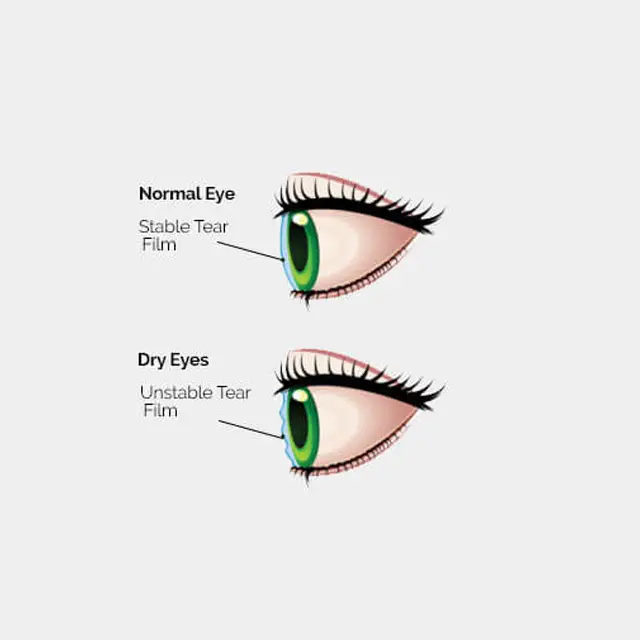
Illustration showing a normal eye with a stable tear film and a dry eye with an unstable tear film.

What Is Dry Eye Syndrome?

Dry eye occurs when the eyes do not produce enough tears, the tears evaporate too quickly, or the tear film does not adequately protect the surface of the eyes. The tear film contains water, oil, and mucus components that work together to keep the eyes lubricated.

Common dry eye symptoms include:

  • Burning, stinging, or gritty sensations
  • Red or irritated eyes
  • Excessive watering
  • Fluctuating or blurred vision 
  • Light sensitivity
  • Eye fatigue
  • Contact lens discomfort
  • Symptoms that worsen later in the day or after screen use

Several eye conditions can produce similar symptoms, so an evaluation is important before beginning treatment. Persistent or severe dry eye may also affect the corneal surface and increase the risk of complications.

What Causes Dry Eye?

Dry eye may have more than one contributing cause. Common factors include inadequate tear production, inflammation, meibomian gland dysfunction, incomplete blinking, prolonged digital device use, contact lens wear, environmental conditions, and certain health conditions or medications.

During your evaluation, our optometrists will consider your symptoms, medical history, medications, daily activities, and the condition of your tear film and eyelids. This information helps us determine which treatments may be appropriate.

A man is sitting in front of a desk, holding a pair of glasses, and covering his face with his hand, possibly indicating discomfort or a headache. He is wearing a denim jacket and a white shirt, and there is a laptop, a book, and a cell phone on the desk. Behind him, there is a shelf with various items, including a bottle, a cup, and a box.

Strong Vision Center – Dry Eye Doctor

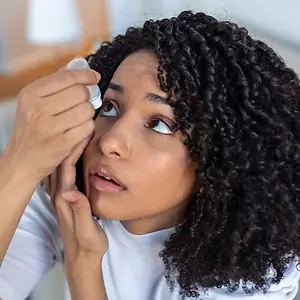
Woman puts eye drops in her eye

How Is Dry Eye Treated?

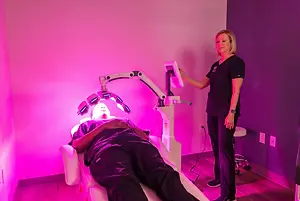
Dry eye treatment depends on what is causing your symptoms and how severely they affect your daily life. Some patients benefit from changes to their eye care routine, while others require prescription medication or in-office treatment.

Your personalized dry eye treatment plan may include:

Why Do My Eyes Feel Dry When I Wake Up?

Morning dry eye symptoms can occur when the eyes are exposed or insufficiently lubricated during sleep. Patients may wake with burning, redness, blurred vision, discomfort, or a sandy sensation.

Possible causes include:

  • Eyelids that do not close completely during sleep
  • Reduced nighttime tear production
  • Dry air from fans, air conditioning, or heating
  • Certain prescription or over-the-counter medications
  • Eyelid damage or changes following an injury or procedure
  • Health conditions that affect the eyes or eyelids

Depending on the cause, treatment may include nighttime lubricating drops or ointment, a moisture-retaining sleep mask, changes to the sleeping environment, or treatment for an underlying eyelid condition. A humidifier may also reduce dryness in the bedroom.

Some antihistamines, decongestants, blood pressure medications, antidepressants, pain relievers, hormones, and other medications can contribute to dry eye. Bring an up-to-date medication and supplement list to your appointment, but do not stop or change any medication without first speaking with the clinician who prescribed it.


A woman is sitting on a couch holding a tissue and covering her face with her left hand while looking at something
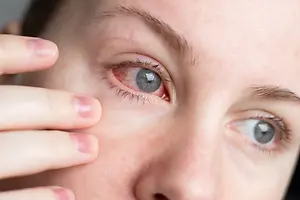
Close-up of a woman's face with one eye red and the other eye gray, she is touching her face with her left hand.

What Is Lagophthalmos?

Lagophthalmos is the inability to close the eyelids completely. When part of the eye remains exposed, tears may evaporate more quickly and leave the cornea vulnerable to irritation or damage.

Symptoms may include:

  • Dryness or irritation
  • Excessive tearing
  • A sensation that something is in the eye
  • Blurred or fluctuating vision
  • Eye pain
  • Symptoms that are worse upon waking

Lagophthalmos may occur during blinking, sleep, or both. Because nocturnal lagophthalmos happens while a person is asleep, patients are often unaware that their eyelids remain partially open.

When Should I Seek Prompt Eye Care?

Contact our office promptly if dry eye symptoms are persistent, worsening, or interfering with your daily activities. Severe eye pain, significant light sensitivity, sudden vision changes, injury, or marked redness may indicate a more urgent problem and should be evaluated without delay.

A woman sits on a couch holding a laptop while rubbing her eyes, indicating fatigue.

Schedule a Dry Eye Evaluation in Cypress

Dry eye symptoms can have several causes, and the treatment that works for one patient may not be appropriate for another. Schedule a dry eye evaluation at Strong Vision to learn what may be contributing to your symptoms and which treatment options may help you manage them.