
Skip to content
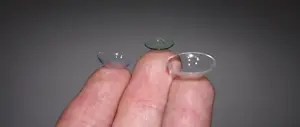
Two contact lenses are held between two fingers on a gray background.

Scleral Lenses for Keratoconus in Cypress

Keratoconus changes the shape of the cornea and can make vision difficult to correct with ordinary eyeglasses or soft contact lenses. Custom scleral lenses create a smooth optical surface over the irregular cornea, helping many patients achieve more stable, functional vision.

Strong Vision provides scleral lens evaluations and fittings for patients with keratoconus in Cypress and surrounding communities.

What Is Keratoconus?

Keratoconus is a progressive condition in which the cornea becomes thinner and bulges outward into an irregular, cone-like shape. Because the cornea provides much of the eye’s focusing power, these changes can cause irregular astigmatism and distorted vision.

Keratoconus often begins during the teenage years or early adulthood, although its onset and rate of progression vary. It commonly affects both eyes, but one eye may be more advanced than the other.

A fingertip with a clear contact lens on it, set against a white background

What Are the Symptoms of Keratoconus?

Symptoms may include:

  • Blurred or distorted vision 
  • Straight lines that appear bent or wavy
  • Increasing nearsightedness or astigmatism 
  • Frequent prescription changes
  • Glare, halos, or streaks around lights
  • Light sensitivity
  • Difficulty seeing at night
  • Trouble obtaining satisfactory vision with glasses
  • Increasing contact lens discomfort 

A comprehensive eye examination and corneal topography can help detect changes in corneal shape. Patients with known keratoconus require continued monitoring because vision correction alone does not show whether the condition is progressing.

What Causes Keratoconus?

The exact cause is not fully understood. Genetics may contribute, and keratoconus can occur in more than one member of a family.

Frequent or forceful eye rubbing is also associated with keratoconus and may contribute to progression. Patients with allergies or chronically itchy eyes should seek care to address their symptoms and reduce the urge to rub.

How Do Scleral Lenses Help Keratoconus?

A scleral lens vaults over the irregular cornea and rests on the sclera, the white part of the eye. The space between the lens and cornea is filled with preservative-free saline before insertion.

Together, the rigid lens and fluid reservoir create a more regular optical surface. This can reduce distortions caused by keratoconus and provide more stable vision than glasses or standard soft lenses for some patients.

Because the lens does not rest directly on the cone, many patients also find scleral lenses more comfortable than smaller corneal gas-permeable lenses. Individual results vary, and careful fitting is required.

Do Scleral Lenses Stop Keratoconus From Progressing?

Scleral lenses correct vision but do not stop the cornea from continuing to change. Patients should continue to receive periodic corneal imaging and examinations even when their vision is good with the lenses.

If testing shows that keratoconus is progressing, we may refer you to a corneal ophthalmologist to discuss treatment intended to stabilize the cornea.

What Other Treatments Are Available for Keratoconus?

Treatment depends on the severity of the condition, whether it is progressing, the presence of corneal scarring, and how well vision can be corrected.

How Are Scleral Lenses Fitted for Keratoconus?

The fitting process begins with a comprehensive examination and detailed mapping of the cornea. A diagnostic lens is then evaluated to determine how it vaults over the cornea and aligns with the sclera.

The final lenses are customized for the shape, prescription, and needs of each eye. Follow-up visits allow us to assess vision, comfort, corneal clearance, and eye health and make adjustments when necessary.

Caring for Scleral Lenses

Proper care reduces the risk of irritation and infection. Follow the cleaning, disinfection, filling, and replacement instructions provided by our team, and never expose your lenses to tap water, swimming pools, lakes, oceans, or hot tubs.

Remove the lenses and contact our office promptly if you develop pain, marked redness, discharge, swelling, light sensitivity, or a sudden change in vision.

Schedule a Keratoconus and Scleral Lens Evaluation

If keratoconus is making it difficult to see comfortably with glasses or conventional contact lenses, scleral lenses may offer another option. Schedule an evaluation at Strong Vision to discuss your corneal health, available treatments, and whether custom scleral lenses are appropriate for you.

Strong Vision Center

monday:
9:00 am - 6:00 pm
tuesday:
8:00 am - 7:00 pm
wednesday:
9:00 am - 6:00 pm
thursday:
9:00 am - 6:00 pm
friday:
9:00 am - 6:00 pm
saturday:
Closed
sunday:
Closed

Strong Vision Center Fairfield

monday:
9:00 am - 6:00 pm
tuesday:
8:00 am - 7:00 pm
wednesday:
9:00 am - 6:00 pm
thursday:
9:00 am - 6:00 pm
friday:
9:00 am - 6:00 pm
saturday:
Closed
sunday:
Closed