
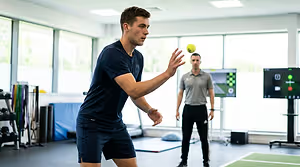
Sports demand more from your visual system than reading an eye chart. Sports vision training in Cypress can assess how an athlete tracks, focuses, reacts, and coordinates vision with movement.
An athlete can have 20/20 eyesight and still lose track of a fast pitch, react late to a pass, or misjudge where a ball will land. That's because clear eyesight represents only one part of athletic vision.
On the field or court, your eyes collect information while your brain decides what it means and how your body should respond. At Strong Vision in Cypress, we evaluate these connected visual skills and create individualized programs based on an athlete's sport, position, abilities, and performance goals.
Sports Vision Training Cypress: Is 20/20 Enough?
20/20 vision measures how clearly you can see at a specific distance. Athletic vision also depends on how efficiently you process and respond to visual information.
Athletes constantly solve complex visual puzzles, whether tracking a fast pitch or monitoring defenders and teammates while moving.
These tasks call on several visual abilities at once. Strong Vision's sports vision assessments may consider skills such as:
- Dynamic visual acuity
- Eye tracking and scanning
- Depth perception
- Eye teaming
- Focusing speed and flexibility
- Peripheral awareness
- Contrast sensitivity
- Visual processing and attention
- Eye-hand, eye-foot, and eye-body coordination
- Visual reaction time
When functional visual skills have room for development, a structured sports vision assessment identifies specific visual-motor abilities to target during training.
What Happens During a Sports Vision Assessment?
Sports vision training begins with a comprehensive assessment of the visual skills used during competition.
Strong Vision evaluates core visual skills to design targeted programs combining in-office sessions, specialized equipment, and custom exercises.
Request a consultation at Strong Vision in Cypress today to start elevating your athletic performance.
Vision Therapy Cypress TX: How Does the Brain Help?
Vision therapy in Cypress, TX can address how the eyes and brain work together rather than focusing solely on eyesight.
Every play begins with information.
Your eyes find the ball. Your brain interprets its movement. Your body responds.
Efficient visual processing allows athletes to track pitches, notice openings, or react to targets automatically.
Strong Vision offers training aimed at strengthening tracking, depth perception, peripheral awareness, and visual reaction times.
Vision Therapy Cypress TX for Eye Tracking
Eye tracking is the ability to follow a moving target accurately.
That skill matters across Cy-Fair sports. Baseball and softball players follow pitches and fly balls. Basketball players track passes. Tennis players follow a ball that changes direction and speed repeatedly.
Sports vision activities can target tracking and scanning based on the athlete's individual assessment and sport.
Sports Vision Training Cypress for Depth Perception
Depth perception helps an athlete judge where an object is in space.
Think about catching a football over your shoulder or meeting a tennis ball with your racket. Your brain has to interpret distance and movement quickly enough for your body to respond.
Strong Vision includes depth perception among the visual skills assessed in its sports vision program.
Sports Vision Training Cypress for Peripheral Vision
Peripheral awareness helps athletes monitor action outside the center of their gaze.
A point guard may focus ahead while still monitoring players approaching from either side. A soccer player can use peripheral information while deciding where to send the ball next.
That wider awareness can become particularly important in fast, crowded sports where several things happen at once.
Concussion Eye Therapy: When Vision Changes After Injury
A concussion can affect the way the eyes and brain work together, which may lead to blurred or double vision, headaches, light sensitivity, or difficulty focusing.
Athletes experiencing visual changes after a concussion need dedicated medical evaluation rather than standard athletic training drills.
Strong Vision provides specialized post-injury vision evaluations using advanced eye-tracking technology to assess visual function.
Sports Vision Training Cypress for Different Sports
Different sports place different demands on an athlete's visual system, so sports vision training should reflect what actually happens during competition.
A baseball player, soccer midfielder, basketball guard, and golfer all use vision differently. Even athletes playing the same sport can face different visual demands based on their positions.
Strong Vision customizes programs around each athlete's specific sport, position, and goals through progressive supervised activities.
Sports Vision Training Cypress for Baseball
Baseball and softball require tracking fast-moving balls, judging trajectories quickly, and coordinating precise physical responses.
Sports Vision Training Cypress for Team Sports
Fast-paced team sports demand constant peripheral awareness to monitor opponents and teammates while staying focused on the play.
Vision Therapy Cypress TX for Precision Sports
Precision sports rely on depth perception, contrast sensitivity, and focus flexibility, which can be identified and trained through personalized assessments.
Vision Therapy Cypress TX for High School Athletes
High school sports bring greater speed, competition, and visual complexity, making efficient visual skills increasingly valuable.
For Cy-Fair athletes, the jump from recreational play to competitive school sports can mean faster pitches, harder passes, tighter defensive coverage, and less time to react.
Certain patterns may give parents and athletes a reason to ask about a sports vision assessment. An athlete may frequently lose track of the ball, react later than expected, misjudge distance, or have trouble maintaining visual awareness during play.
Sports vision training works alongside coaching, conditioning, practice, and proper technique. Its role is specific: identify and train visual abilities that athletes rely on during competition.
Concussion Eye Therapy and Sports Vision Care
Concussion eye therapy begins with identifying the visual changes that followed the injury and determining which type of care fits those findings.
Visual concerns after a concussion deserve individualized attention. Symptoms such as headaches, blurred or double vision, light sensitivity, or difficulty focusing may affect school, reading, screen use, and athletic activities.
Strong Vision evaluates functional vision concerns after brain injuries and may recommend lenses, prisms, rehabilitation activities, or coordinated care based on the patient's findings.
Vision care forms one part of a comprehensive recovery plan following healthcare provider return-to-play guidelines.
FAQs
Sports Vision Training Cypress: Who Can Benefit?
-
Strong Vision provides individualized sports vision training for youth, high school, collegiate, adult, and recreational athletes.
An assessment can be useful for athletes who want to learn more about the visual abilities involved in their sport. It may also identify areas where targeted visual training could complement regular coaching and practice.
Sports Vision Training Cypress: Does 20/20 Matter?
-
Yes. Clear eyesight matters in sports, but 20/20 acuity describes only one aspect of vision.
While clear 20/20 sight is valuable, a sports vision assessment focuses on functional skills like tracking, depth perception, and reaction time.
Vision Therapy Cypress TX: Is It Sports Training?
-
The terms can overlap, but the goals can differ.
Sports vision training focuses on visual and visual-motor abilities used during athletic activity. Vision therapy or rehabilitation may address functional visual concerns identified through an evaluation, including some problems associated with brain injuries.
Strong Vision can evaluate the patient's needs and recommend an appropriate approach.
Concussion Eye Therapy: When Should Athletes Seek Care?
-
Athletes who experience vision changes following a concussion should tell the healthcare professionals managing their injury.
Blurred or double vision, headaches, light sensitivity, and trouble focusing are among the visual concerns that can occur after a brain injury. Strong Vision offers evaluations for vision changes associated with concussion and other brain injuries.
Sports Vision Training Cypress: Can I Train at Home?
- A personalized program may include home exercises alongside in-office sessions and supervised activities tailored to the athlete's goals.
Sports Vision Training Cypress: How Long Does It Take?
-
There is no single timeline for every athlete. Program duration and frequency depend on the visual skills being addressed, consistency with training, and the individual's response.
Periodic reassessment helps the team monitor the targeted skills and adjust the program when appropriate.
Vision Therapy Cypress TX at Strong Vision
Seeing the scoreboard clearly matters. So does tracking a pass, spotting movement beside you, judging distance, and turning visual information into a well-timed response.
At Strong Vision, we provide individualized sports vision programs and concussion recovery care tailored to your sport and visual needs.
Book a sports vision assessment at Strong Vision in Cypress, TX, to learn how your visual abilities may be affecting your game.