Dry eye symptoms often become a daily frustration. Burning, gritty discomfort, blurred vision, and constant use of artificial tears can make it difficult to stay comfortable throughout the day. When drops, warm compresses, or eyelid cleaning provide only short-term relief, Low-Level Light Therapy (LLLT) may offer a more effective option.
At our practice, LLLT is part of a personalized dry eye treatment plan designed to support healthier tear production and reduce inflammation. This guide explains how LLLT works, what your visit includes, and which patients may benefit most.
What Is Low-Level Light Therapy for Dry Eye?
Low-Level Light Therapy is a non-invasive treatment that uses controlled wavelengths of red or near-infrared light to help reduce inflammation and improve the performance of Meibomian glands. These glands produce the protective oils in the tear film. When they become blocked or irritated, tears evaporate more quickly, which leads to dryness and blurred vision.
LLLT warms the eyelid area and supports gland function. This helps stabilize the tear film and provides more lasting relief than artificial tears alone.
Why Dry Eye Happens
Dry eye can develop for many reasons, and evaporative dry eye linked to Meibomian Gland Dysfunction is especially common. Contributing factors may include:
- Digital screen use
- Contact lens wear
- Age-related changes
- Eyelid inflammation
- Certain medications
- Autoimmune conditions
- Environmental dryness or wind
Artificial tears soothe dryness temporarily, but they do not correct gland function. Treatments like LLLT help address this underlying cause.
What to Expect During Your LLLT Visit
Every patient begins with a dry eye evaluation at our practice. This ensures the treatment matches your needs and overall eye health.
Step 1: Dry Eye Evaluation
Your doctor may assess:
- Tear stability
- Eyelid and gland health
- Inflammation or blepharitis
- Symptoms during daily activities
This evaluation helps guide your treatment plan.
Step 2: Preparing for Treatment
Preparation is simple. You may be asked to:
- Avoid eye makeup on the day of treatment
- Remove contact lenses before the session
- Keep the eyelid area free of lotions or heavy creams
Step 3: The LLLT Session
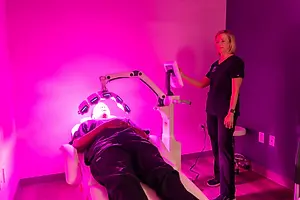
During treatment, you will sit comfortably while gentle light energy is applied near the eyelids. Most patients describe the experience as warm and calming. Sessions are brief and do not require recovery time.
Step 4: Aftercare
There is usually no downtime. Some patients notice improvement quickly. Others experience gradual changes over several visits.
How Many Treatments You May Need
Your doctor determines the number of sessions based on your symptoms and how your glands respond. Many patients complete a series of treatments and return for maintenance visits when needed.
When Improvement Begins
Patients often ask how long it takes to see results. Many notice:
- Less irritation and burning
- Better comfort during screen use
- Reduced need for artificial tears
- Clearer vision with fewer fluctuations
Because LLLT works with the glands themselves, improvements usually continue over time.
Who Benefits from Low-Level Light Therapy
LLLT may be recommended if you experience:
- Dry, gritty, or burning eyes
- Redness or eyelid inflammation
- Blurred vision that improves with blinking
- Watery eyes caused by irritation
- Discomfort during digital screen use
- Difficulty wearing contact lenses
- Diagnosed Meibomian Gland Dysfunction
It is often recommended when other treatments have not provided long-term relief.
Benefits of Low-Level Light Therapy
Many patients choose LLLT because it:
- Is non-invasive and comfortable
- Helps improve Meibomian gland function
- Reduces inflammation
- Supports a more stable tear film
- Works well with other dry eye therapies
The goal is to help restore comfort and support healthier tear production.
How LLLT Compares with Other Dry Eye Treatments
- LLLT and Eye Drops. Eye drops provide temporary comfort but do not treat gland issues.
- LLLT and Warm Compresses. Warm compresses help soften oils, while LLLT delivers more consistent therapeutic heat.
- LLLT and Prescription Medications. Medications may reduce inflammation or increase tear production. LLLT supports the eyelid glands directly. Many patients receive the best results from a combined approach.
Frequently Asked Questions
Does LLLT hurt?
No. Most patients describe the session as warm and relaxing.
How long does treatment take?
Sessions are brief. Your appointment may include additional evaluation or follow-up care.
Is LLLT safe?
Yes. It is considered a safe, non-invasive option when supervised by an eye care professional.
Is dry eye permanently cured?
Dry eye is often long-term. LLLT reduces symptoms and supports healthier gland function, though some patients benefit from maintenance visits.
Does LLLT help with MGD?
Yes. LLLT is frequently used to support Meibomian gland performance.
What should I avoid before treatment?
Avoid eye makeup or heavy creams near the eyelids.
Why Early Dry Eye Treatment Matters
Blocked or poorly functioning glands may worsen over time. Treating dry eye early helps preserve gland health and reduces the risk of progression. If you experience frequent irritation or fluctuating vision, a more advanced treatment plan may be helpful.
Schedule a Dry Eye Evaluation
If you are struggling with dry eye and want more than short-term relief, Low-Level Light Therapy may be an effective option. Our practice provides complete dry eye evaluations and personalized treatment plans to help improve comfort and visual clarity.
Schedule your dry eye evaluation today to learn whether LLLT is right for you.
To learn more about how we treat dry eye with Low-Level Light Therapy, visit our LLLT for Dry Eye page.